Case Study | Scale With Sanity Retainer
She came in to scale. She left with the foundation to choose her own future.
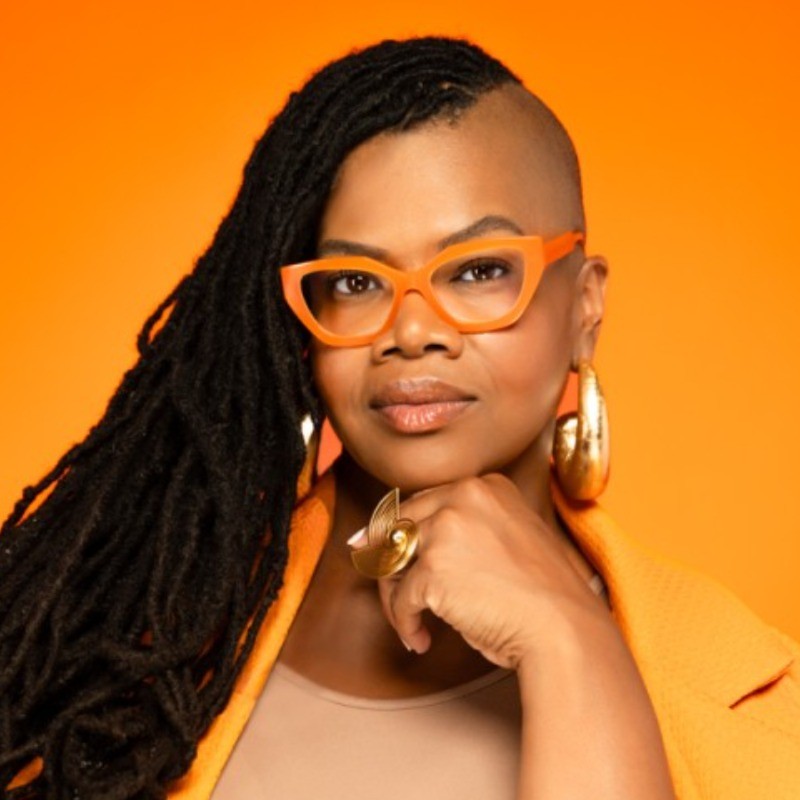
Lydia Hamilton came to The Remote Catalyst with a growing project management consultancy, a corporate role about to start, and a backend held together by scattered tools and team members who had nothing real to step into. This is the story of what we built and the truth it gave her.
Lydia Hamilton
Founder, Lyd on tha Go
Engagement Scale With Sanity +
A focused 90-day Scale With Sanity retainer designed to build operational infrastructure that supports delegation, team performance, and the founder stepping fully out of day-to-day operations.
Timeline 90 days +
Three months of structured work, broken into diagnostic, build, and handoff phases. Designed to give the founder a stable, repeatable operational environment by the end of the engagement.
Industry Project management +
Lydia runs Lyd on tha Go, a project management consultancy. The work centered on infrastructure that supports a team of contract project managers serving clients independently of the founder.
Pillars Team ops + systems +
Two of the three TRC pillars activated. Scalable Team Operations built the team structure and hiring pipeline; Systems Implementation centralized the tools and documented the processes underneath.
Before working with The Remote Catalyst
The business was growing. It was still running entirely through her.
Lydia had built a project management consultancy with real momentum. A new executive-level corporate role was about to begin. And underneath it all, her business was held together by scattered tools, undocumented processes, and project managers who had nothing real to step into.
Delegation was not sticking. Not because her team could not do the work. Because the infrastructure to support them did not exist yet.
What she was risking, if she did not fix it: a business that would not survive her stepping into the corporate role. And a corporate role that would not get her best, because the business kept pulling her back.
What she actually needed
Not more effort. Real infrastructure.
One operating environment
Replacing email, Zoom, Teams, and scattered storage with a single source of truth her team could rely on.
A team structure
Roles, ownership, and accountability that her PMs could actually step into without needing her to brief every move.
A real hiring system
Not just to onboard one PM, but to make every hire after that smoother than the last.
A path from reactive to proactive
A way to capture what worked, what did not, and use that intelligence to make the business smarter over time.
The approach
Three phases. Ninety days.
Phase 1 | Weeks 1 to 2
Diagnostic and stabilize
Started with a full operational diagnostic to surface the real bottlenecks, not the surface ones. Mapped the tool sprawl, documented the undocumented, and identified what was being held together by Lydia personally. The picture became clear within the first two weeks.
Phase 2 | Weeks 3 to 8
Centralize and document
Pulled every tool and workflow into one clean operating environment. Standardized communication, payment routing, and folder architecture. Built the team structure documents, contractor agreements, culture handbook, training modules, and the weekly check-in cadence. Then built a project close-out and QA framework so performance patterns would compound over time.
Phase 3 | Weeks 9 to 12
Hire, onboard, and hand off
Built the complete PM hiring pipeline and used it to onboard Lydia's first project manager: clean, structured, repeatable from day one. Delivered a quarterly marketing and outreach strategy to move the business from reactive to proactive. By the end of the 90 days, the operational foundation was hers to walk forward on.
What we built
Six things that changed how the business runs.
- Operational diagnostic: a full picture of where the business was leaking energy, time, and clarity.
- Centralized operating environment: one Google Workspace home replacing email, Zoom, Teams, and scattered storage.
- Complete PM hiring pipeline: job scopes, contractor agreements, culture handbook, training modules, and a weekly check-in cadence.
- First PM onboarded through the system: proof the pipeline worked, smoothly, the first time it ran.
- Project close-out and QA framework: capturing performance patterns to build operational intelligence over time.
- Quarterly marketing and outreach strategy: moving the business from reactive to proactive.
The results
What changed, operationally and personally.
Operationally
- Tool fragmentation resolved into one operating environment.
- Team structure built before the first hire walked in.
- Founder dependency removed across every role.
- Repeatable PM onboarding system live and tested.
Personally
- Made the corporate transition with confidence, not chaos.
- The clarity to make the right CEO decision on her own terms.
- A business that can pause, stabilize, and restart without rebuilding.
- The truth of what strong operations actually give you.
In her own words
"She took the lead on key operating procedures and put systems in place."
"She helped me scale by putting clear, repeatable processes in place so I could focus on growth instead of getting lost in the day-to-day."
Lydia Hamilton, Founder, Lyd on tha Go
If you have built something real and you are tired of being the thing holding it together, let's talk.
Book a Sanity Call. We will look at what is actually happening in your operations and what to fix first.
BOOK A SANITY CALL